

For dairy farmers and livestock operations, efficient manure management is key to sustainability, operational efficiency, and environmental compliance. Manure agitators and separators are critical tools in this process—here’s a clear, step-by-step overview of how they work to transform raw manure into usable resources.
1. Manure Collection: The Starting Point
The process begins with collecting raw manure from dairy cows, which typically includes a mix of solid feces, urine, and bedding materials (such as straw or sawdust). This raw mixture is the foundation of the separation process, and proper collection ensures consistency in steps.
2. Manure Preparation: Setting the Stage for Separation
Raw manure often contains large solid clumps and an uneven liquid slurry—so preparation is essential. This step involves breaking down clumps and blending the mixture to create a more homogenous consistency, ensuring optimal performance during separation.
3. Transport to Separation Equipment
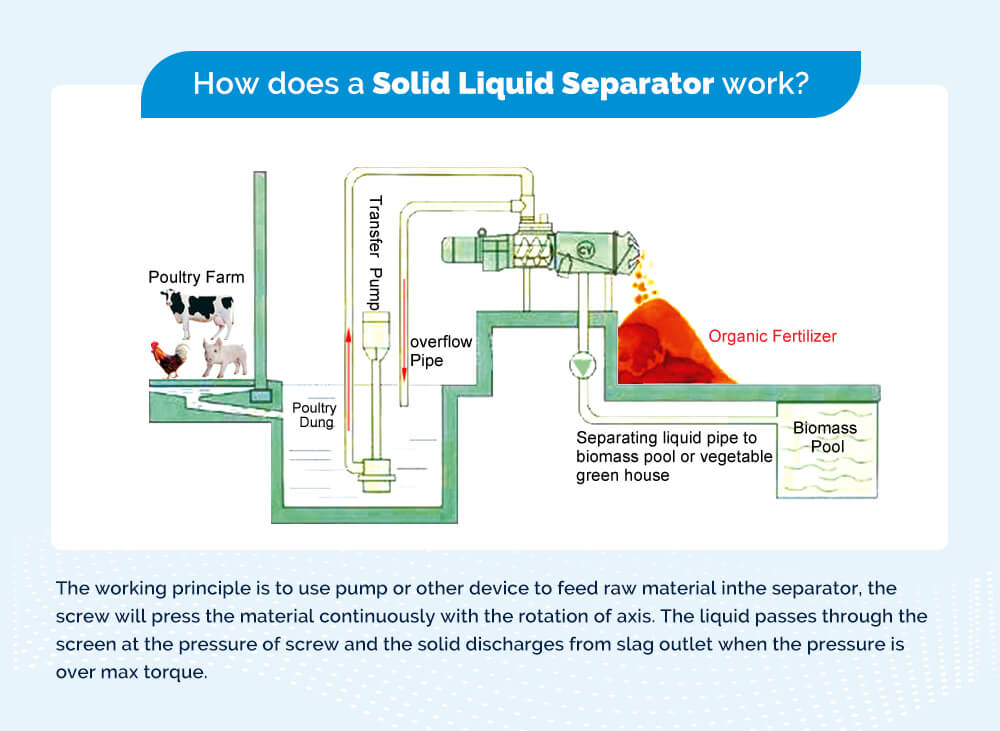
Once prepared, the manure is transported to the manure agitator and separator system. Depending on the operation’s size and setup, this is typically done using manure pumps or conveyors, which efficiently move the mixture to the next stage without disrupting its consistency.
4. Primary Separation: The Core Process
The manure agitator kicks off the primary separation—often the most critical step in the process. This takes place in a mechanical separator (common types include screw presses, centrifuges, or screen separators), which uses mechanical force to split the manure into liquid and solid components.
5. Optional Secondary Separation (For Enhanced Refinement)
Many operations add a secondary separation step to refine the results further. This may involve additional screens, settling basins, or supplementary processes to achieve a higher degree of solid-liquid separation—ideal for operations seeking more purified end products.
6. Collection & Repurposing of Separated Fractions
The final step involves collecting the two separated fractions, both of which can be repurposed to add value to the operation:
*Solid Fraction (Manure Solids/Sludge): Collected and further processed for uses like composting (to create organic fertilizer) or as bedding material for livestock—reducing waste and cutting costs.
*Liquid Fraction: Now nutrient-concentrated, this is collected separately and can be used as a liquid fertilizer for crops, maximizing the value of the manure’s natural nutrients.
By streamlining manure management, these tools not only reduce environmental impact but also turn a waste product into a valuable resource—supporting sustainable, profitable livestock operations.
can not be empty
can not be empty

HUATAO GROUP - Filter Machine & Wedge Wire Screen
Address: No.298 Zhonghua North Street, Shijiazhuang 050000 China.
Tel: +86 0311 80690567
Email: team12@huataogroup.com
 WhatsApp & WeChat : +86 17732852675