

For commercial cattle farms, manure management is one of the most critical parts of environmental compliance and sustainable farming. Many farm owners overlook that improper manure handling can cause soil pollution, odor problems, parasite spread, and even policy penalties.
On average, one adult cow produces about 11 tons of manure per year, depending on breed, age, and feeding conditions. With large-scale breeding volume, untreated cow manure becomes a huge waste burden.
Today, we summarize the 7 mainstream and practical cow manure disposal methods widely adopted by global cattle farms, helping you choose the most suitable solution for your farm.
1️⃣ Natural Drying (Low-Cost & Simple)
Natural drying is the most traditional and budget-friendly manure treatment method. Farmers spread fresh cow manure evenly on clean ground and let it dry through natural sunlight and air ventilation. After dehydration, the dry manure can be stored and transported by agricultural machinery.
Pros: Zero energy consumption, simple operation, no technical threshold.
Cons: Requires large open space and long drying cycle, easily affected by rainy weather, unstable drying effect, and only suitable for small-scale and non-standard farms.
2️⃣ Direct Farmland Fertilization (Convenient Recycling)
Dry cow manure can be directly applied to farmland as organic fertilizer, ideal for cattle farms surrounded by crop fields. It realizes on-site waste recycling and reduces fertilizer costs.
Note: Raw cow manure contains bacteria, parasites, and insect eggs. Direct use without treatment may bring hidden dangers to crops, soil, and human health.
3️⃣ Thermal Drying (Easy Storage & Transportation)
This method adopts professional drying rooms or drying kilns to remove moisture from cow manure through thermal energy. After treatment, the manure features lower water content, smaller volume, and lighter weight.
Dry manure can not only be stored and transported conveniently but also serve as high-calorie biomass fuel.
Note: Exhaust gas generated during thermal drying must be treated professionally to avoid air pollution.
4️⃣ Incineration Treatment (Complete Sterilization)
Cow manure is collected and incinerated in professional incineration equipment. High-temperature incineration can completely kill parasites, bacteria, and harmful microorganisms in manure.
Pros: Thorough harmless treatment, no biological pollution risk.
Cons: High energy consumption, serious air pollution, strict environmental audit restrictions, and rarely adopted by regular modern farms.
5️⃣ Anaerobic Digestion (Green Energy Recycling)
As a renewable and eco-friendly solution, anaerobic digestion decomposes organic matter in cow manure via microorganisms to producebiogas and high-quality bio-fertilizer.
This method effectively reduces greenhouse gas emissions, improves energy utilization rate, and realizes dual recycling of energy and fertilizer.
Note: It requires professional equipment, dedicated sites, and standardized operation management with high overall investment and maintenance costs, more suitable for super-large-scale farm clusters.
6️⃣ Commercial Organic Fertilizer Production (High Economic Value)
Cow manure is rich in organic matter. After proportioning with auxiliary materials and professional fermentation treatment, it can be processed into commercial organic fertilizer.
This approach reduces the use of chemical fertilizers, improves crop quality and soil activity, and creates additional profit points for cattle farms.
Note: Formal production requires professional technology, complete equipment, and compliance with industry production standards.
7️⃣ Biomass Energy Utilization (Circular Economy Mode)
Cow manure is a high-quality biomass resource. Through anaerobic digestion or combustion treatment, it can be converted into biogas, heat energy, or electric energy for farm power supply, heating, and other scenarios.
It perfectly realizes livestock waste recycling and zero-emission environmental management.
Final Summary
Farm owners need to select the most suitable method according to farm scale, site conditions, local environmental policies, and economic needs.
For most modern medium and large cattle farms, mechanical screw press solid-liquid separation + organic fertilizer recycling stands out as the most practical, cost-effective, and policy-compliant solution by far. Compared with traditional methods, professional mechanical dewatering solves the core pain points of large land occupation, low efficiency, secondary pollution, and high operating costs. It is currently the mainstream standard solution for global large-scale breeding farms.
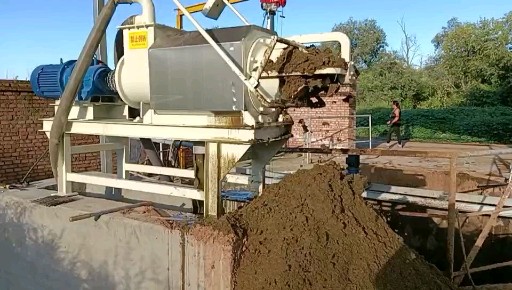
Get Professional Manure Treatment Solutions
We provide high-end customized screw press cow manure dewatering machines and complete livestock waste treatment system solutions for global cattle farms.
✅ High efficiency & energy saving
✅ No chemical flocculant needed
✅ Stable dry solid output
✅ Customized for different farm working conditions
Feel free to contact us for free project solution & equipment quotation.
can not be empty
can not be empty

HUATAO GROUP - Filter Machine & Wedge Wire Screen
Address: No.298 Zhonghua North Street, Shijiazhuang 050000 China.
Tel: +86 0311 80690567
Email: team12@huataogroup.com
 WhatsApp & WeChat : +86 17732852675